Reading Theme

Midnight Studio
Warm Sepia
Old Parchment
Clean Paper
17px
Chapters
3D Light Study
1. The four basic forms2. The values of light3. Where the light comes from4. Hard light, soft light and distance5. Cast shadows and lamp height6. Portrait lighting patterns7. The planes of the head8. Hands and feet9. The figure and the mass10. Colour, temperature and the second lamp11. Composing a still life with light
VOLUX Academy — 3D Light Study

Composing a still life with light

Several objects, two lamps, one idea
Lesson 11 of 11Colour and compositionAcademy and Pro
Overview

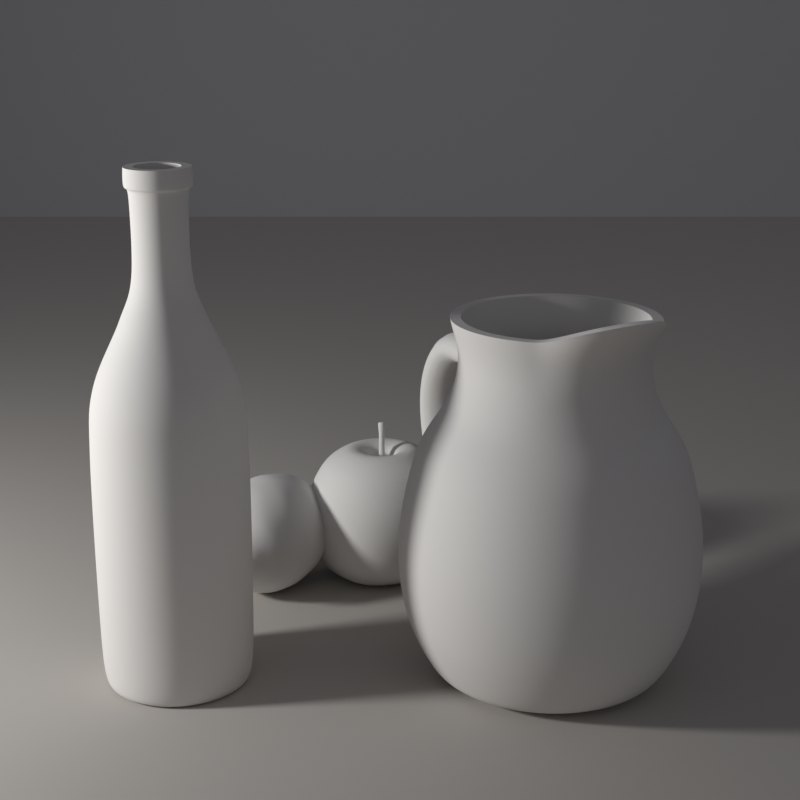
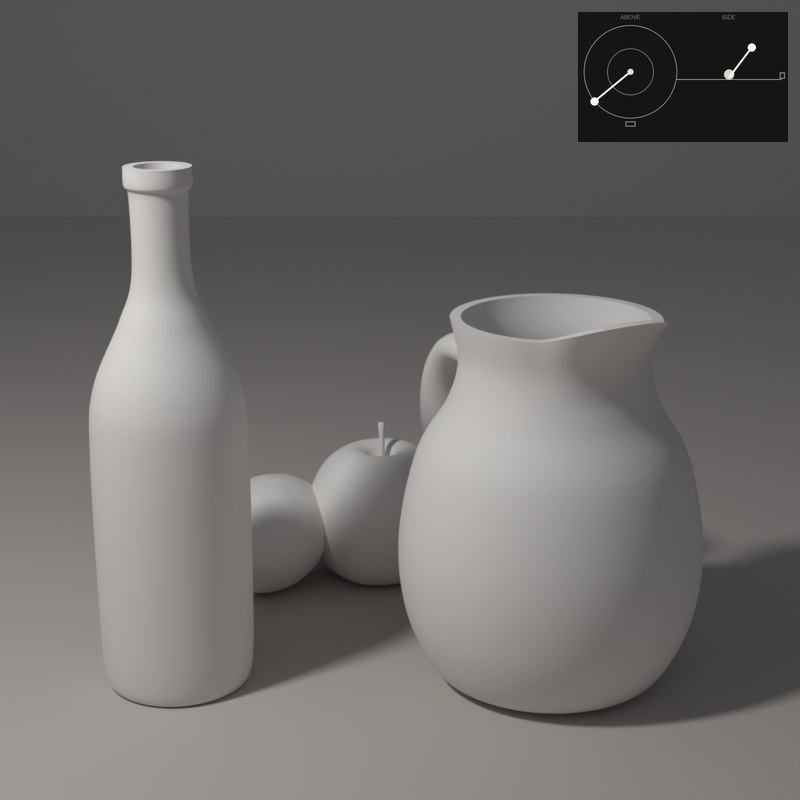
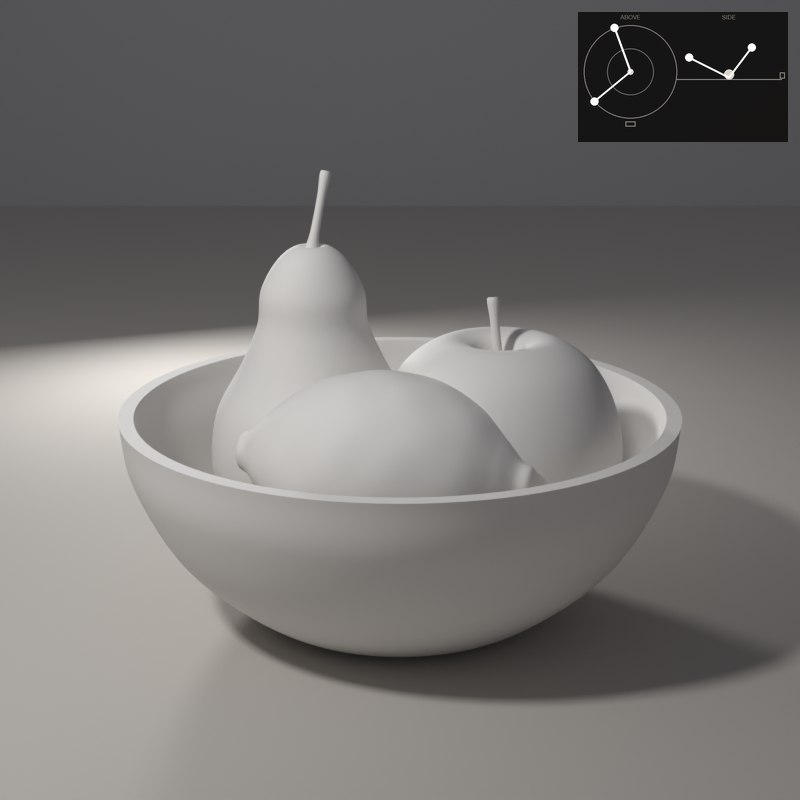
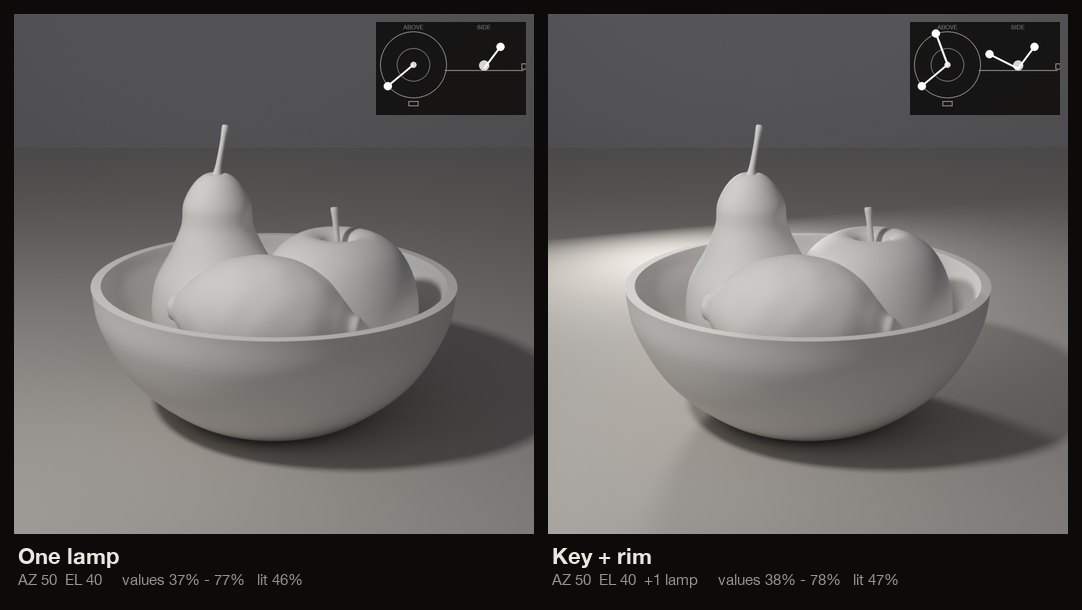
With several objects the light does more than model each one: it groups them. One lamp from the side ties the objects together with a single shadow direction.
None
50° toward the picture’s left, 40° above · values on the form 35% to 75%

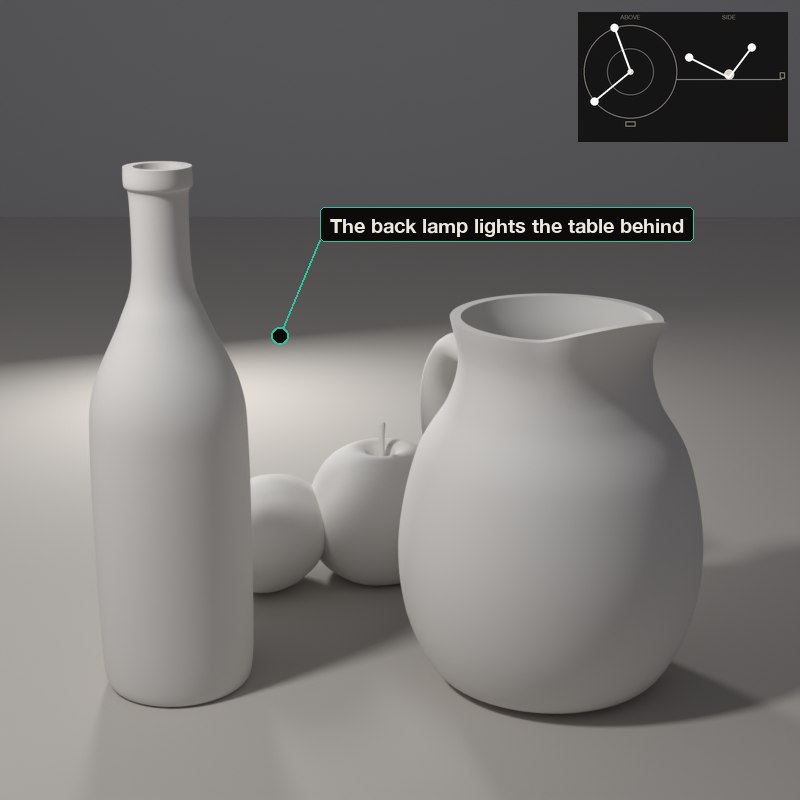
A second, weaker lamp from behind outlines them and separates them from the wall. A low raking lamp makes long shadows that connect everything.

THE TABLE FROM ABOVE

One lamp

THE TABLE FROM ABOVE

Key and rim

The eye follows light, so the brightest area is where the viewer will look first.

· · ·
Read the light

What to look for

Every shadow points the same way: that is what makes a group read as one scene.
50° toward the picture’s left, 40° above · values on the form 35% to 75%
1

Every shadow points the same way: that is what makes a group read as one scene.

FROM ABOVEFROM THE SIDECAMERACAMERA
AZ 50° EL 40°
darkest 35%average 55%brightest 75%lit 52%
The brightest object, or the brightest part of an object, becomes the focal point.
50° toward the picture’s left, 40° above / 160° toward the picture’s left, 25° above (behind the subject) · values on the form 37% to 76%
2

The brightest object, or the brightest part of an object, becomes the focal point.

FROM ABOVEFROM THE SIDECAMERACAMERA12
L1 AZ 50° EL 40° · L2 AZ 160° EL 25°
darkest 37%average 56%brightest 76%lit 51%
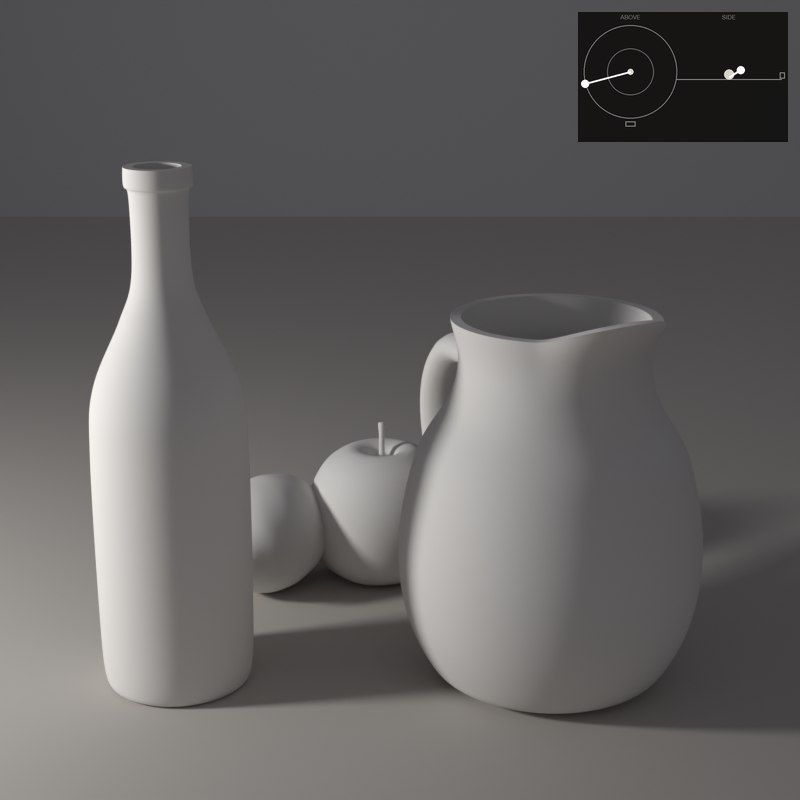
A back lamp draws a rim of light along the edges and lifts the group off the wall.
75° toward the picture’s left, 9° above · values on the form 32% to 81%
3

A back lamp draws a rim of light along the edges and lifts the group off the wall.

FROM ABOVEFROM THE SIDECAMERACAMERA
AZ 75° EL 9°
darkest 32%average 50%brightest 81%lit 34%
Overlapping shadows are darker than single shadows: use them to place objects in depth.
50° toward the picture’s left, 40° above / 160° toward the picture’s left, 25° above (behind the subject) · values on the form 38% to 78%
4

Overlapping shadows are darker than single shadows: use them to place objects in depth.

FROM ABOVEFROM THE SIDECAMERACAMERA12
L1 AZ 50° EL 40° · L2 AZ 160° EL 25°
darkest 38%average 57%brightest 78%lit 47%

Now light a group: look for the one bright accent, the large shadow shapes and the shadows each object throws on the next.
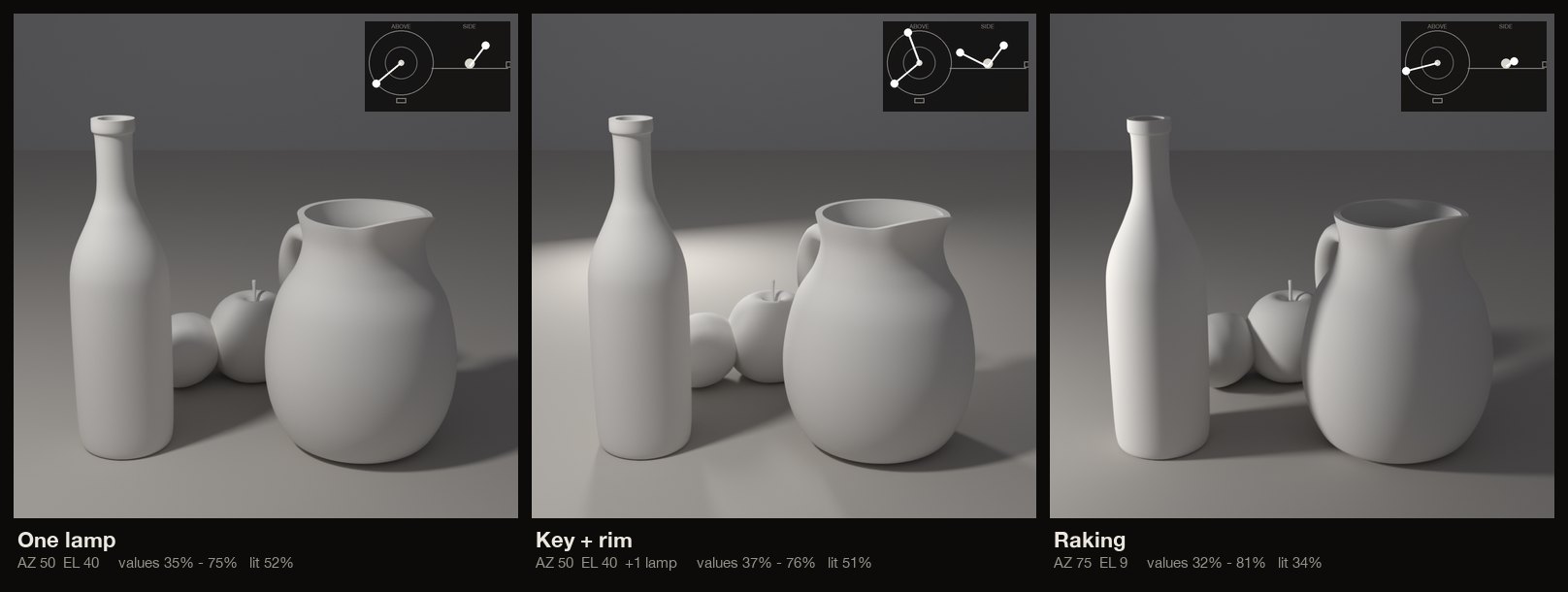
The table set
The table set
The fruit bowl
The fruit bowl
· · ·
Set-ups

The set-ups, with numbers

Each card is one lamp position: the picture it makes, a diagram of where the lamp stands (azimuth is measured from the camera: 0° is a lamp at the camera, positive turns it toward the picture’s left, 180° is straight behind; elevation is the angle above the table), and the values measured on the form itself.
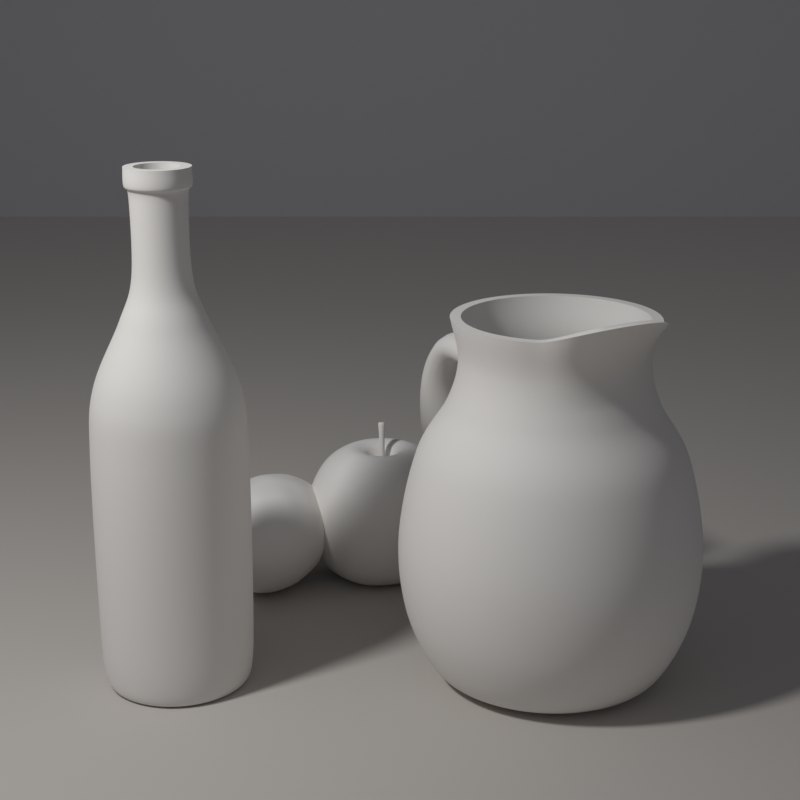
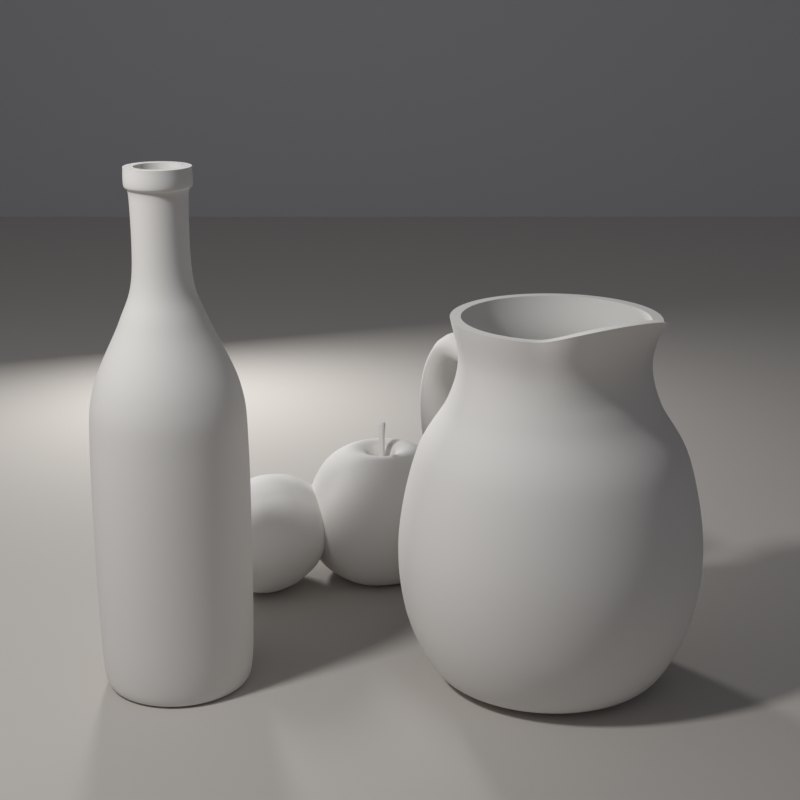
One lamp
One lampFROM ABOVEFROM THE SIDECAMERACAMERA
AZ 50° EL 40°
darkest 35%average 55%brightest 75%lit 52%
Load in the room →
Key + rim
Key + rimFROM ABOVEFROM THE SIDECAMERACAMERA12
L1 AZ 50° EL 40° · L2 AZ 160° EL 25°
darkest 37%average 56%brightest 76%lit 51%
Load in the room →
Raking
RakingFROM ABOVEFROM THE SIDECAMERACAMERA
AZ 75° EL 9°
darkest 32%average 50%brightest 81%lit 34%
Load in the room →
· · ·
Two traditions

In painting and in photography

In painting

Dutch still-life painters often worked from one window and a dark ground. The light groups the objects, and the brightest edge tells the eye where to look first.

None
50° toward the picture’s left, 40° above / 160° toward the picture’s left, 25° above (behind the subject) · values on the form 37% to 76%
In photography

Product and food photographers build a still life with a key, a fill card and a back light. The back light lifts the group off the background.

None
75° toward the picture’s left, 9° above · values on the form 32% to 81%
· · ·
In the Light Study Room

Now you

Choose the table set or the fruit bowl. Start with one lamp at 50 degrees, then add lamp 2 behind and low. Lower lamp 1 until the shadows touch the next object.

Open this lesson in the Light Study Room

The room opens with the shape and the first set-up already loaded, and the same diagram you see here follows your lamp as you move it. Drag the lamp’s marker on the picture, or move it on the pad, and switch between Picture, Light only, Surface and Shadow. Or open it from inside the studio: the Study button in the bottom bar, then Academy lessons. The Light Study Room is a separate classroom for learning light on 3D shapes; when you are ready, “Send to studio” takes the shape into the main editor.

Exercises

  1. Compose the table set so the bottle's shadow touches the jug.
  2. Add a back lamp at 160 degrees and half strength: what gets outlined?
  3. Put the lamp very low: which object does the long shadow connect to?
· · ·
Keep reading

The masters of this idea

← Colour, temperature and the second lampAll lessons