Reading Theme

Midnight Studio
Warm Sepia
Old Parchment
Clean Paper
17px
Chapters
3D Light Study
1. The four basic forms2. The values of light3. Where the light comes from4. Hard light, soft light and distance5. Cast shadows and lamp height6. Portrait lighting patterns7. The planes of the head8. Hands and feet9. The figure and the mass10. Colour, temperature and the second lamp11. Composing a still life with light
VOLUX Academy — 3D Light Study

Cast shadows and lamp height

What a shadow tells you about the object and the lamp
Lesson 5 of 11FoundationsAcademy and Pro
Overview

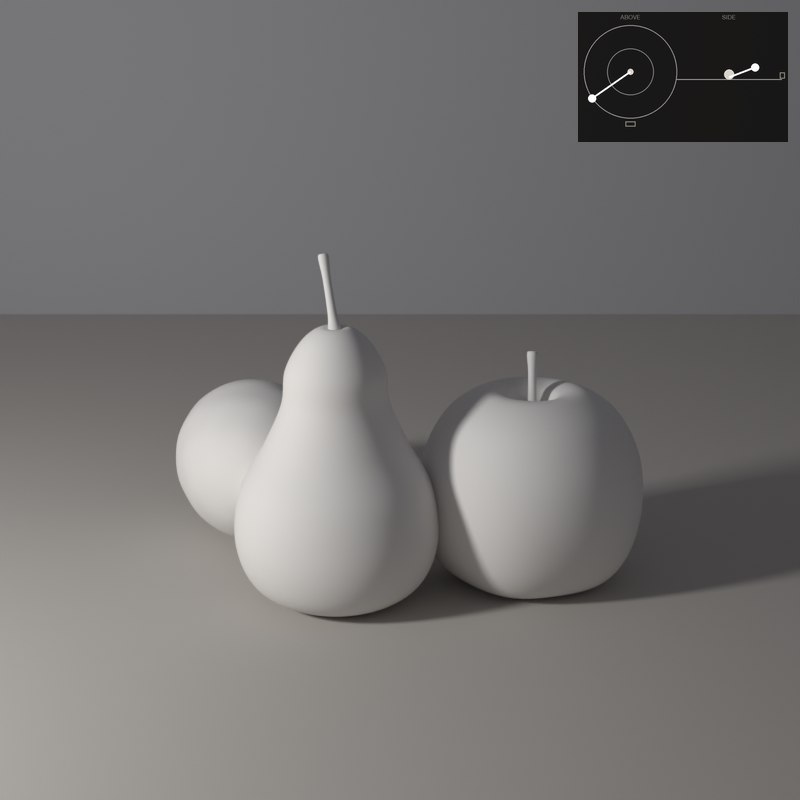
A cast shadow is a second drawing of the object, projected onto the table, and it is distorted by the angle of the lamp. A low lamp throws long shadows that lie far from the objects; a high lamp throws short, compact ones tucked underneath.
None
55° toward the picture’s left, 12° above · values on the form 33% to 85%

Shadows also connect objects: where two shadows overlap, or where a shadow touches the next object, the eye understands the space between them.

SHADOW = HEIGHT / TAN(ELEVATION)
12° lamp: shadow 4.7× the height35° lamp: shadow 1.4× the height65° lamp: shadow 0.5× the height

The three heights in the pictures: the lower the lamp, the longer the shadow, by simple trigonometry.

· · ·
Read the light

What to look for

The shadow is longest and thinnest when the lamp is lowest.
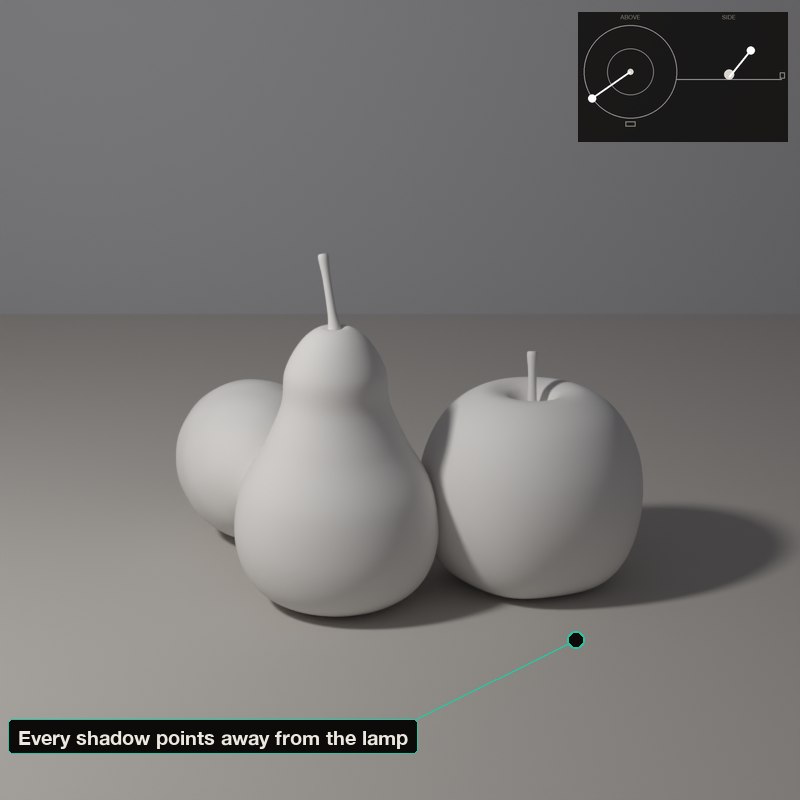
55° toward the picture’s left, 12° above · values on the form 33% to 85%
1

The shadow is longest and thinnest when the lamp is lowest.

FROM ABOVEFROM THE SIDECAMERACAMERA
AZ 55° EL 12°
darkest 33%average 58%brightest 85%lit 51%
Directly overhead the shadow almost disappears beneath the fruit and the table looks bright and flat.
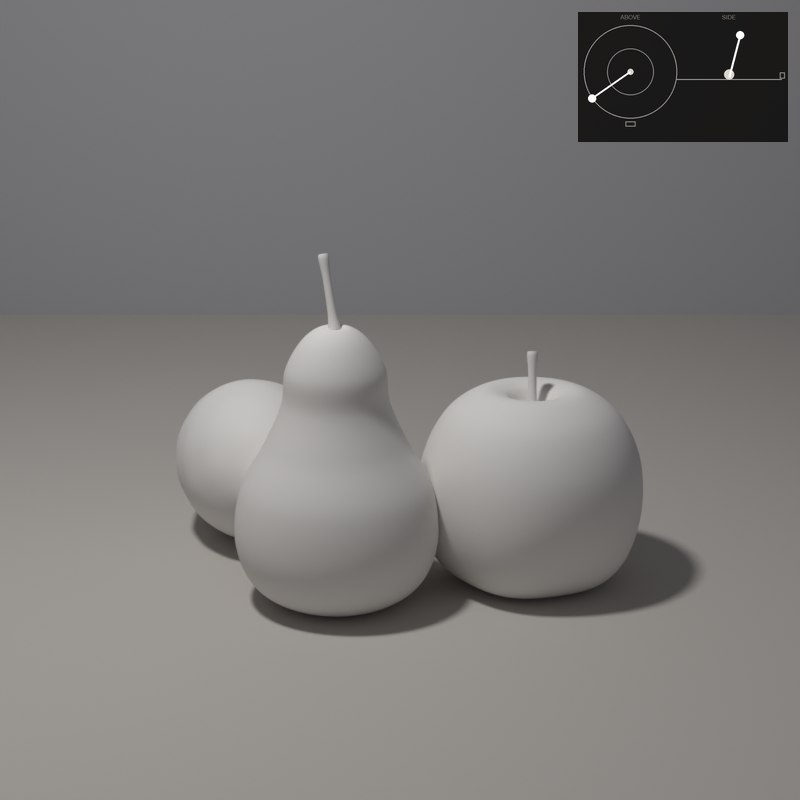
55° toward the picture’s left, 35° above · values on the form 36% to 78%
2

Directly overhead the shadow almost disappears beneath the fruit and the table looks bright and flat.

FROM ABOVEFROM THE SIDECAMERACAMERA
AZ 55° EL 35°
darkest 36%average 58%brightest 78%lit 55%
Where a shadow falls on another object it wraps around that object's form.
55° toward the picture’s left, 65° above · values on the form 40% to 74%
3

Where a shadow falls on another object it wraps around that object's form.

FROM ABOVEFROM THE SIDECAMERACAMERA
AZ 55° EL 65°
darkest 40%average 56%brightest 74%lit 47%
The shadow always points away from the lamp: you can find the lamp from the shadows alone.
55° toward the picture’s left, 35° above · values on the form 36% to 78%
4

The shadow always points away from the lamp: you can find the lamp from the shadows alone.

FROM ABOVEFROM THE SIDECAMERACAMERA
AZ 55° EL 35°
darkest 36%average 58%brightest 78%lit 55%

Lower the lamp and the shadows grow long and touch the next fruit; raise it and they shrink under each one. Read the length as a multiple of the height.
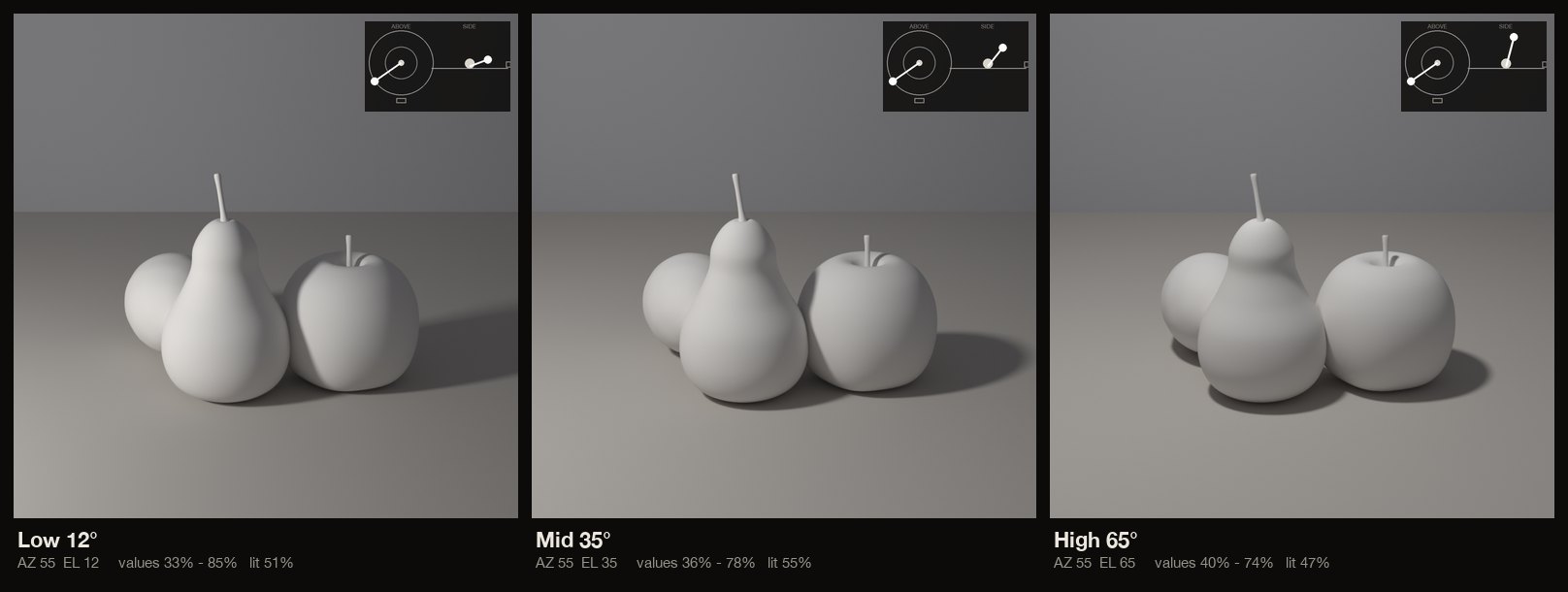
Three heights, same lamp direction
· · ·
Set-ups

The set-ups, with numbers

Each card is one lamp position: the picture it makes, a diagram of where the lamp stands (azimuth is measured from the camera: 0° is a lamp at the camera, positive turns it toward the picture’s left, 180° is straight behind; elevation is the angle above the table), and the values measured on the form itself.
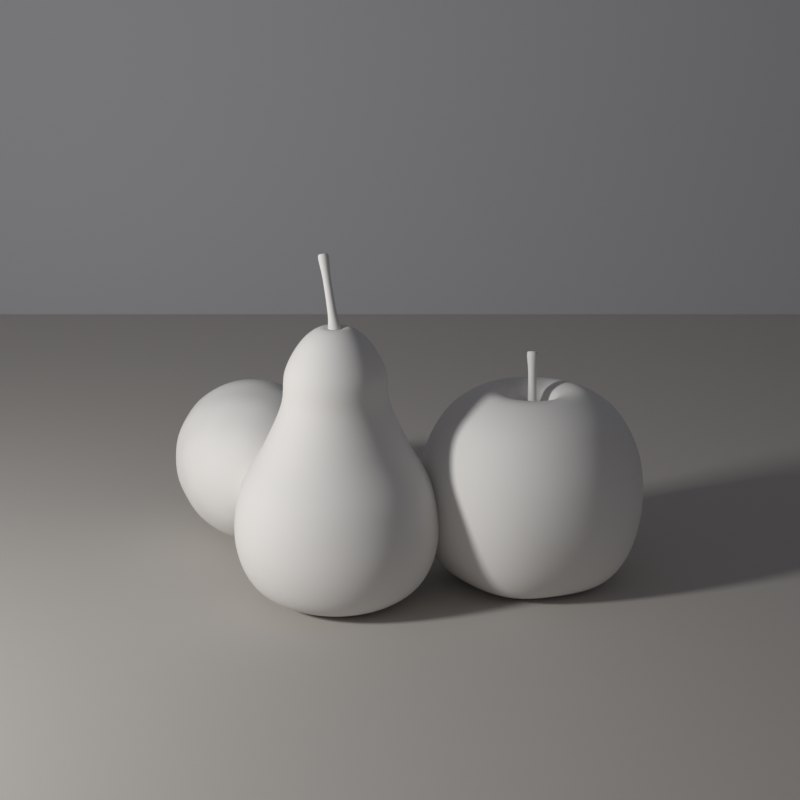
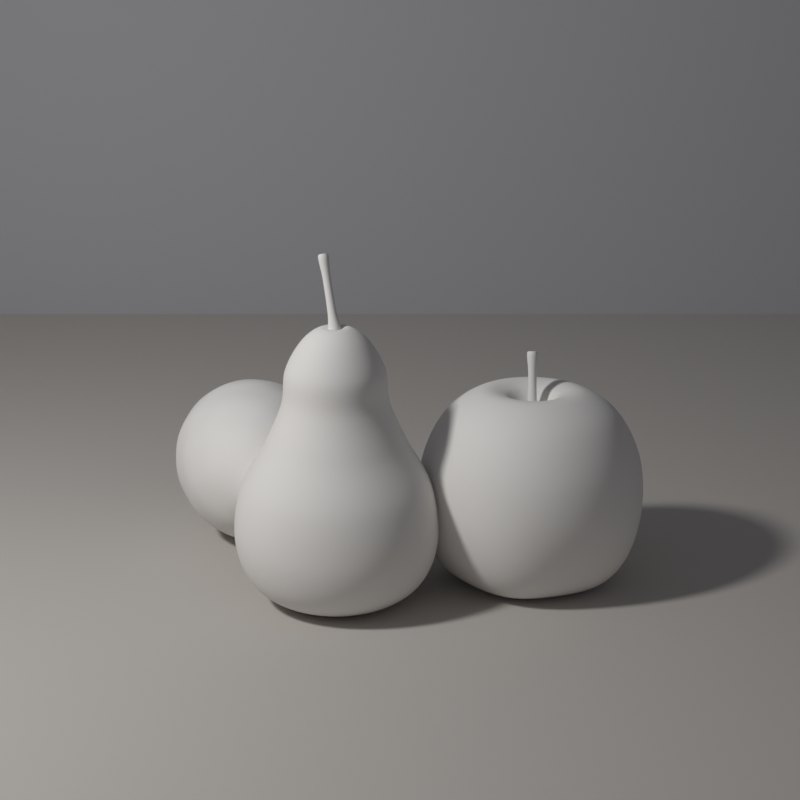
Low 12°
Low 12°FROM ABOVEFROM THE SIDECAMERACAMERA
AZ 55° EL 12°
darkest 33%average 58%brightest 85%lit 51%
Load in the room →
Mid 35°
Mid 35°FROM ABOVEFROM THE SIDECAMERACAMERA
AZ 55° EL 35°
darkest 36%average 58%brightest 78%lit 55%
Load in the room →
High 65°
High 65°FROM ABOVEFROM THE SIDECAMERACAMERA
AZ 55° EL 65°
darkest 40%average 56%brightest 74%lit 47%
Load in the room →
· · ·
Two traditions

In painting and in photography

In painting

A cast shadow is a second drawing of the object. Painters use it to anchor an object to its surface and to link objects to each other.

None
55° toward the picture’s left, 35° above · values on the form 36% to 78%
In photography

Shadow direction is how a viewer reads the position of the lamp, and the time of day. Hard cast shadows on a table make a product look grounded.

None
55° toward the picture’s left, 65° above · values on the form 40% to 74%
· · ·
In the Light Study Room

Now you

Drag the lamp's elevation from 10 to 80 degrees and watch the three shadows shorten together. Switch to the Shadow view to see only the shadows.

Open this lesson in the Light Study Room

The room opens with the shape and the first set-up already loaded, and the same diagram you see here follows your lamp as you move it. Drag the lamp’s marker on the picture, or move it on the pad, and switch between Picture, Light only, Surface and Shadow. Or open it from inside the studio: the Study button in the bottom bar, then Academy lessons. The Light Study Room is a separate classroom for learning light on 3D shapes; when you are ready, “Send to studio” takes the shape into the main editor.

Exercises

  1. From the shadows alone, work out where the lamp is. Then check on the pad.
  2. Raise the lamp until the three shadows are the same length as the objects are wide.
  3. Make two shadows overlap. Where is the overlap darkest?
· · ·
Keep reading

The masters of this idea

← Hard light, soft light and distanceAll lessonsPortrait lighting patterns →