The figure and the mass
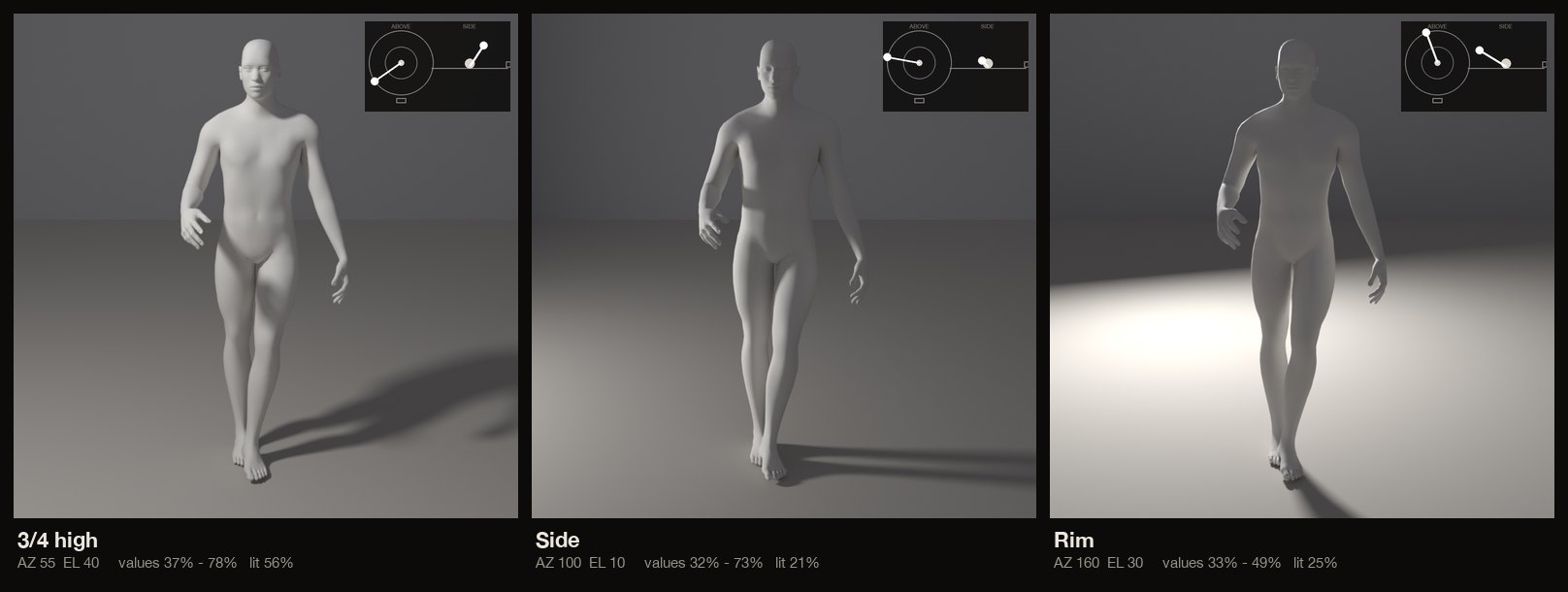
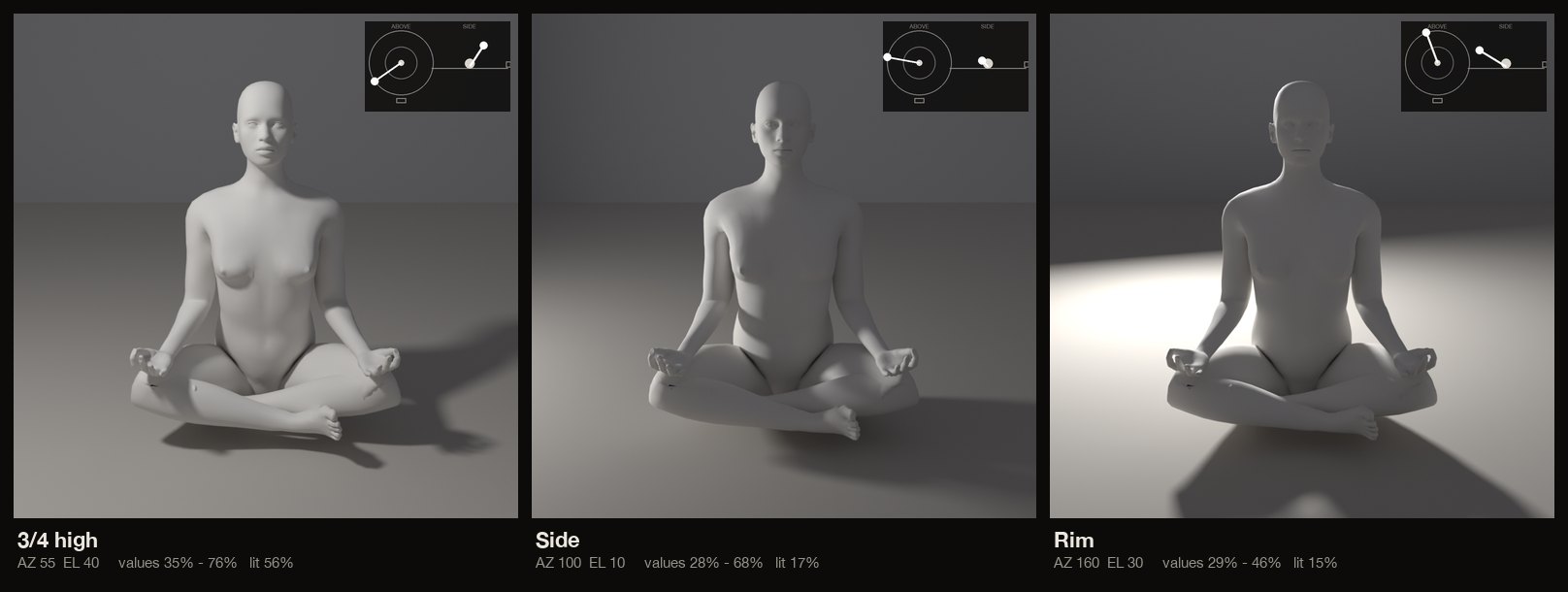
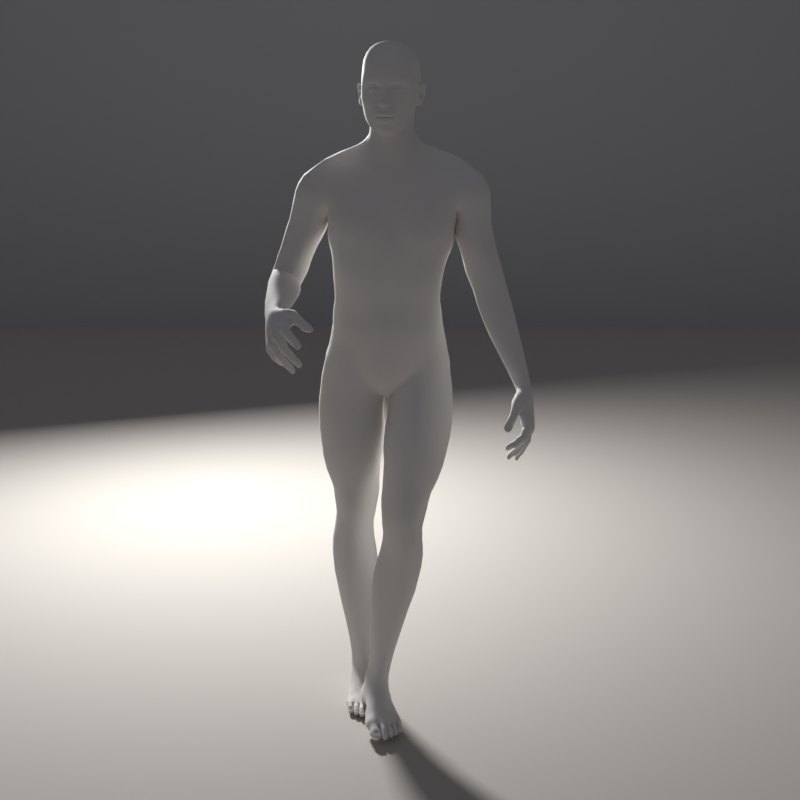
On a whole figure the light shows the big masses before any detail: the torso, the pelvis, the legs, the arms as separate volumes that turn away from the lamp. Top light makes the chest and shoulders bright and the eyes and the underside of the arms dark.
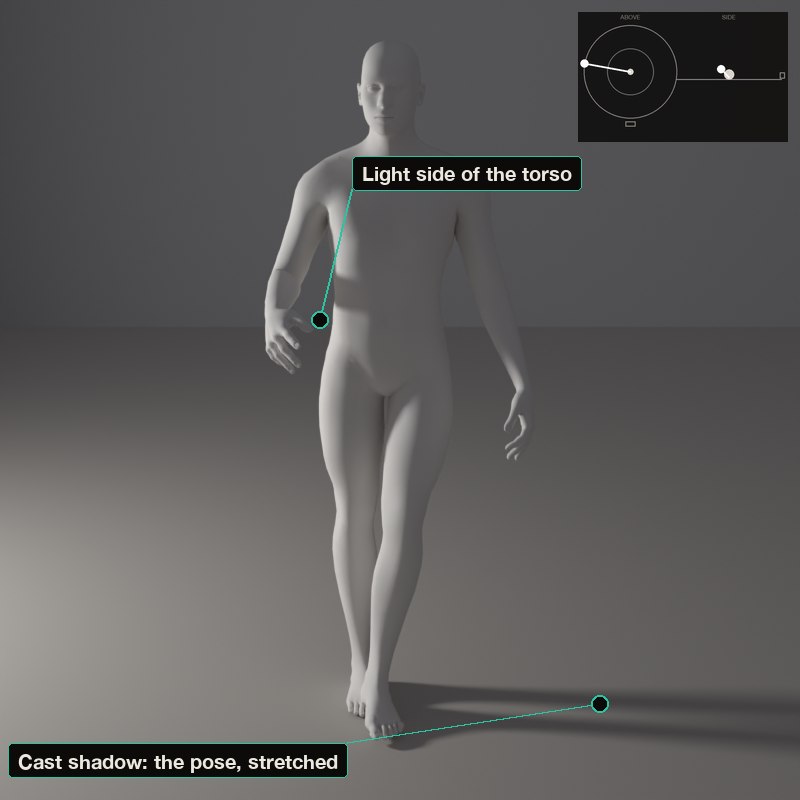
Side light divides the body into a lit half and a shadow half. Back or rim light draws the outline and is the favourite of illustrators for heroic figures.
What to look for
With side light, the figure divides into a lit half and a shadow half; look for the core shadow down the torso.
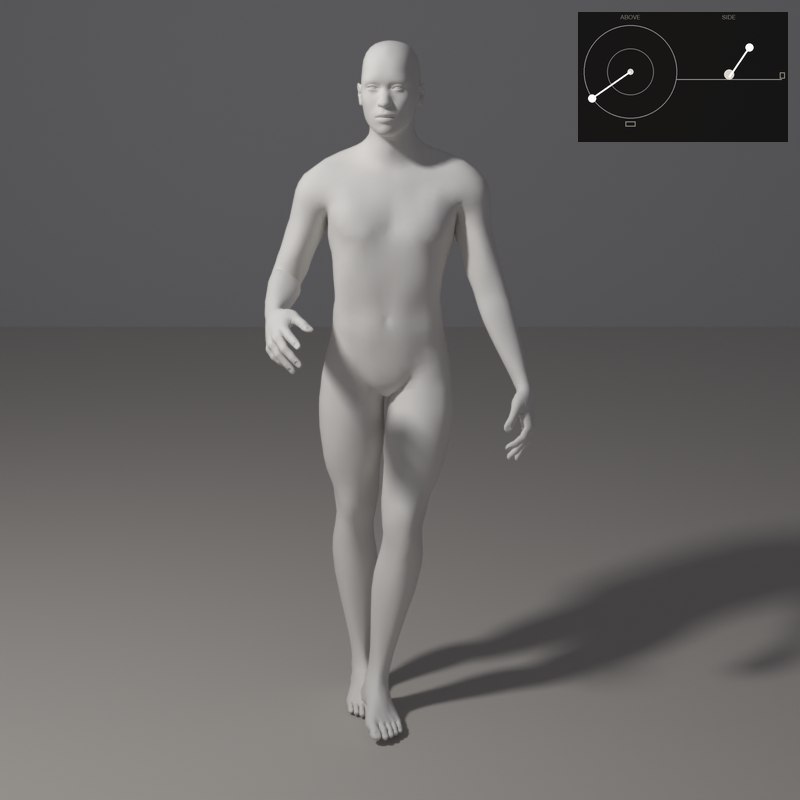
With top light, the shoulders and head are bright; the legs fade into shadow.
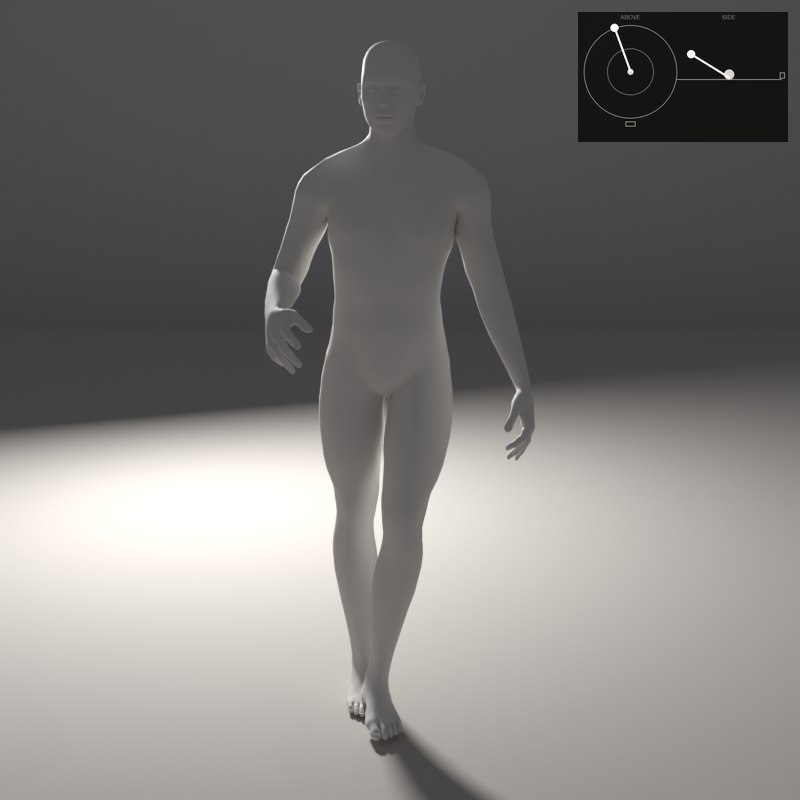
Rim light separates the figure from the background with a thin bright edge.
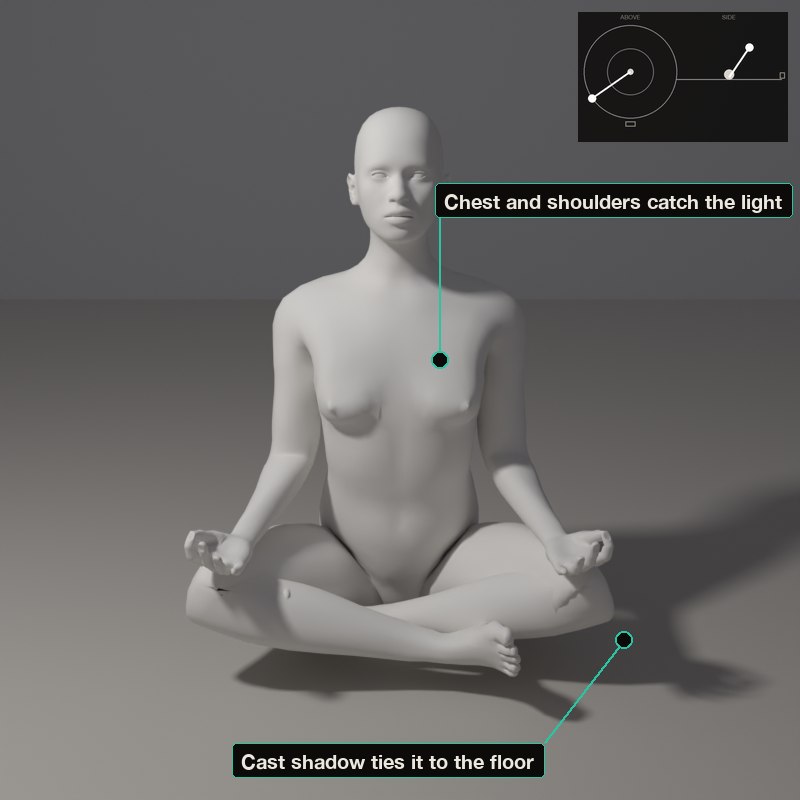
The cast shadow on the floor shows the pose as a flat, stretched version of the figure.
Light a whole figure and ask where the large masses are: head, chest, hips, legs. Side light separates them; frontal light flattens them.
The set-ups, with numbers
Each card is one lamp position: the picture it makes, a diagram of where the lamp stands (azimuth is measured from the camera: 0° is a lamp at the camera, positive turns it toward the picture’s left, 180° is straight behind; elevation is the angle above the table), and the values measured on the form itself.
In painting and in photography
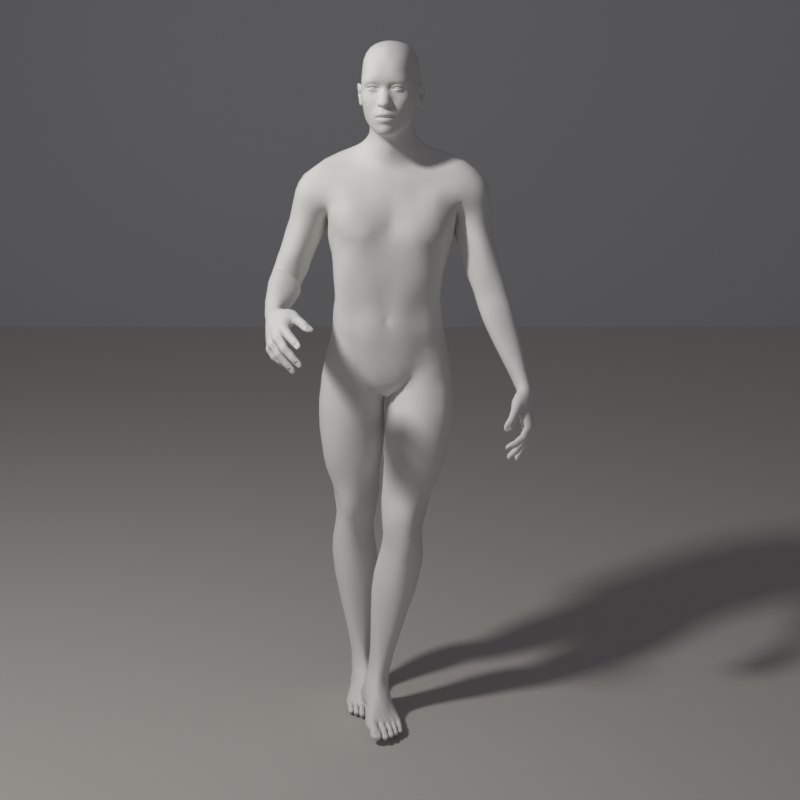
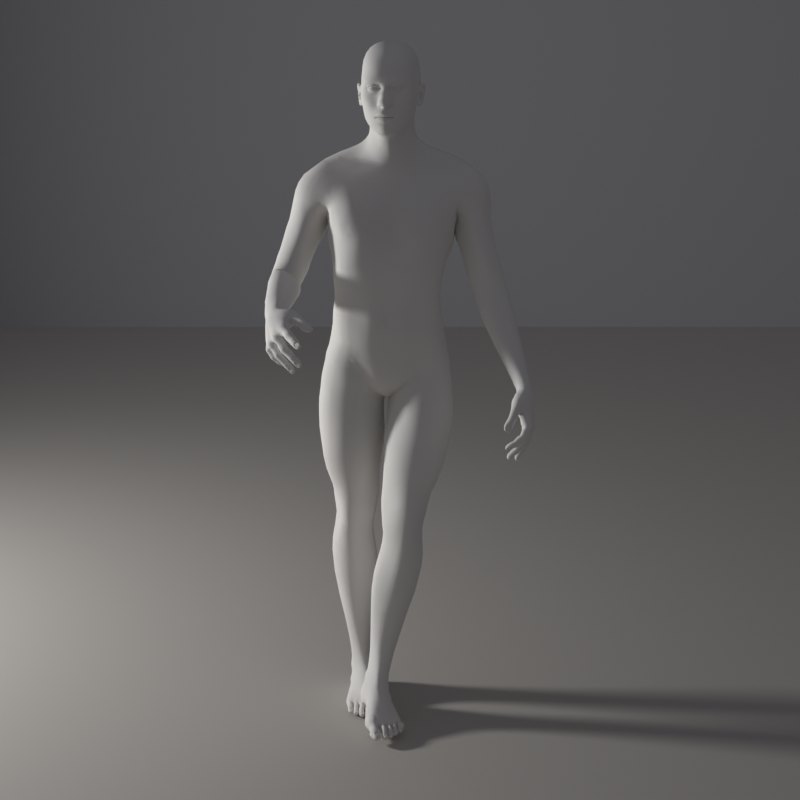
Classical figure drawing begins with a few large masses of light and shadow, and only then moves to the parts. The mass comes first, the muscle second.
Full-length shooting uses large sources and distance so the light stays even from head to feet. A lamp placed near the head lights it far more strongly than the feet.
Now youAcademy & Pro
Pick any of the 42 poses (male and female, standing, sitting, lotus, running). Keep the lamp at 3/4 first, then move it behind. Use Turntable to see the same light from every side of the body.
Open this lesson in the Light Study Room
The room opens with the shape and the first set-up already loaded, and the same diagram you see here follows your lamp as you move it. Drag the lamp’s marker on the picture, or move it on the pad, and switch between Picture, Light only, Surface and Shadow. Or open it from inside the studio: the Study button in the bottom bar, then Academy lessons. The Light Study Room is a separate classroom for learning light on 3D shapes; when you are ready, “Send to studio” takes the shape into the main editor.
Exercises
- Use Turntable to see the same side light on all four sides of the standing figure.
- Place the lamp above and ask where the eyes are.
- Switch between standing and lotus: where does the cast shadow tell you more about the pose?