Hands and feet
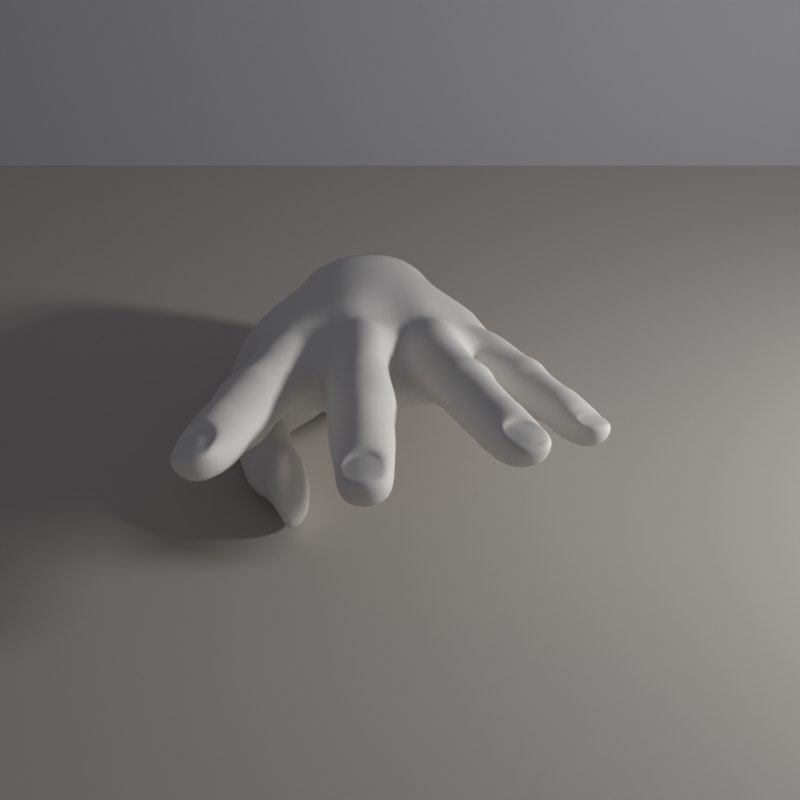
A hand looks complicated until you see it as simple forms: a block for the palm, cylinders for the fingers, a wedge for the thumb. Light shows these forms the same way it shows the basic forms.
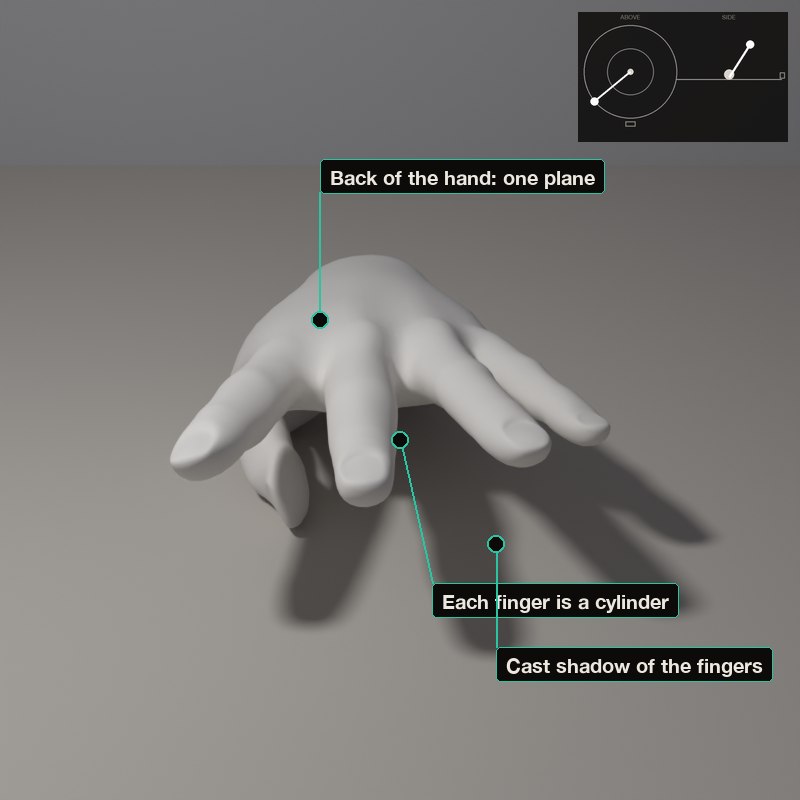
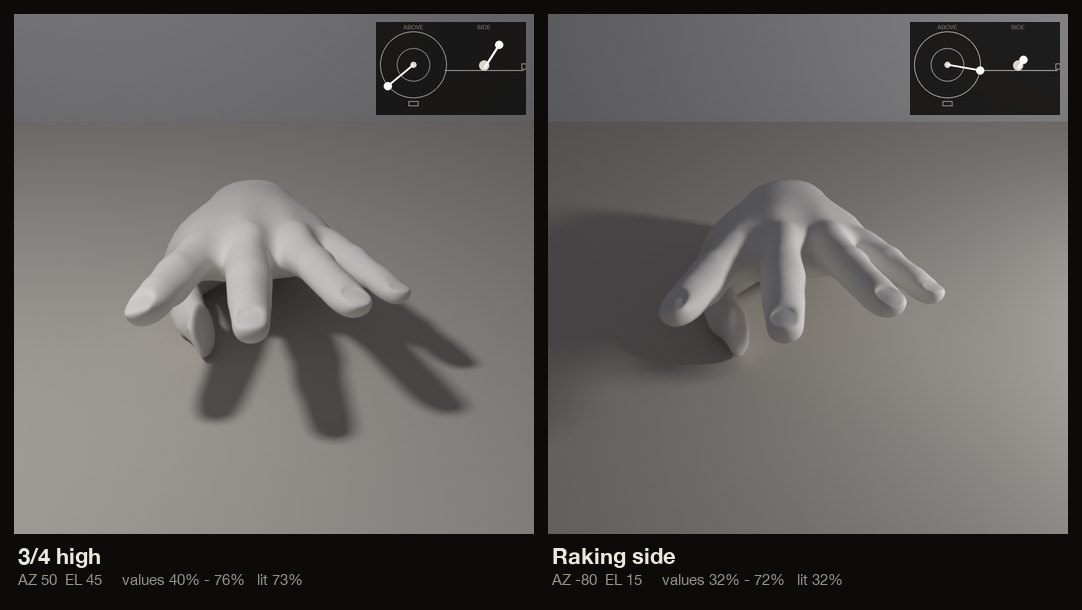
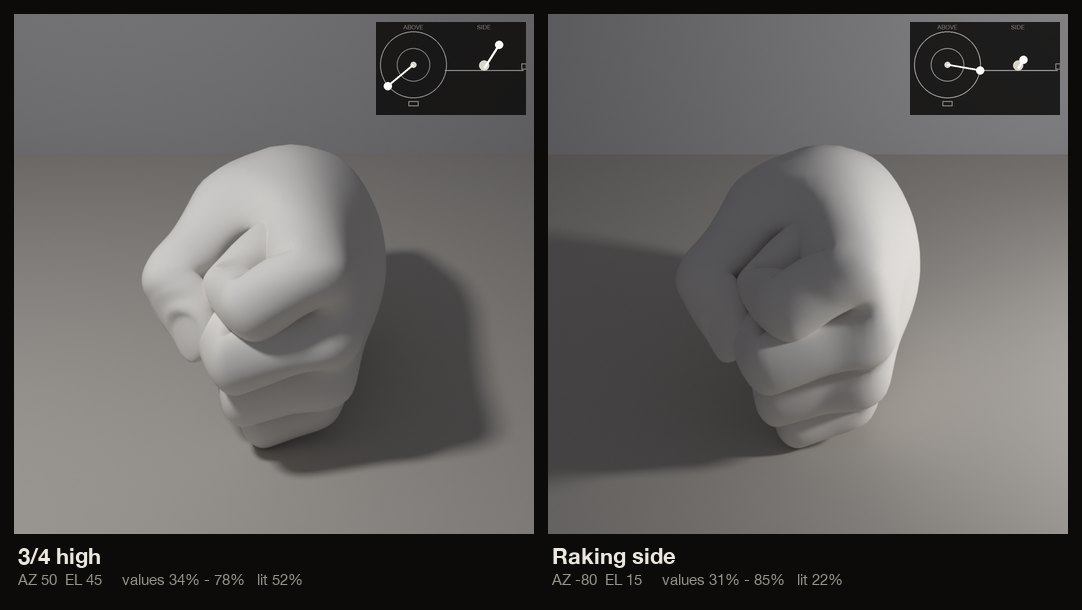
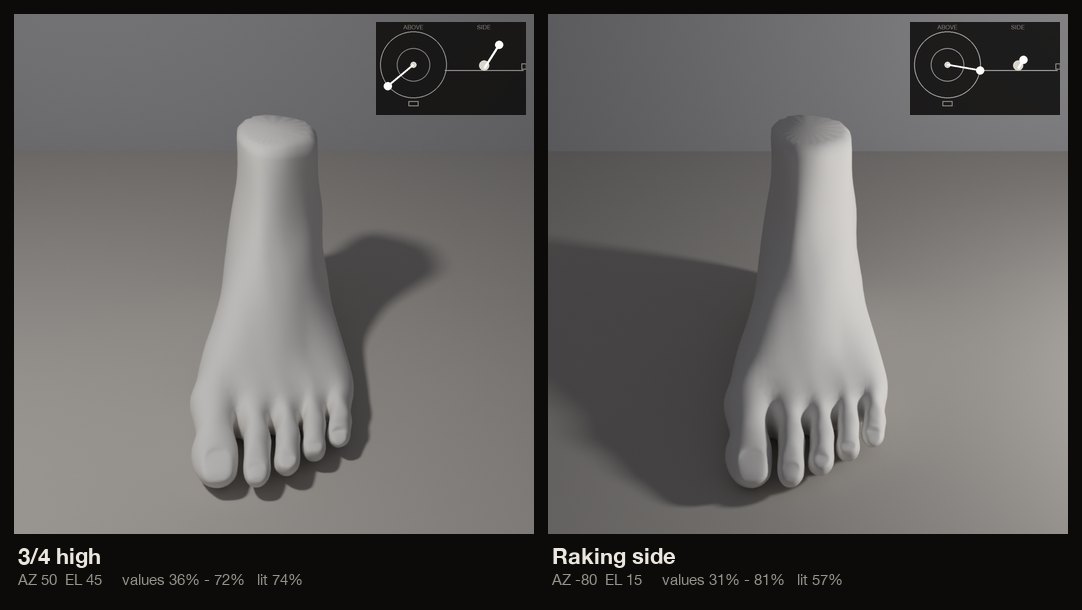
The fist is a cube with four bumps; the open hand is a flat plane with tubes on it; the foot is a wedge with a ramp for the arch. Side light shows the tubes, top light flattens them.
What to look for
Each finger is a cylinder: a gradient across, a flat band along.
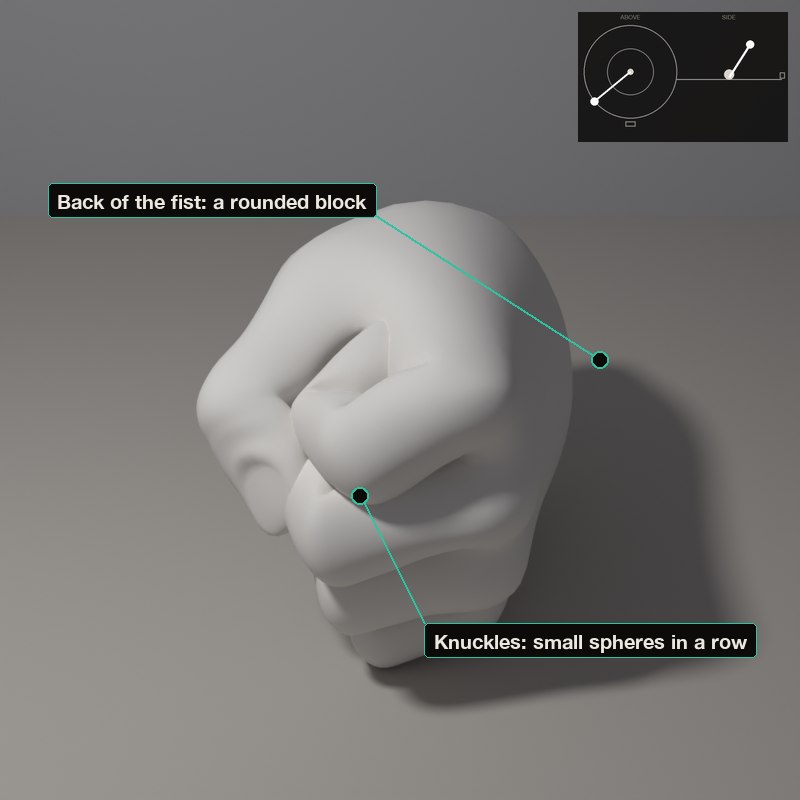
The knuckles of the fist catch a highlight in a row, like four small spheres.
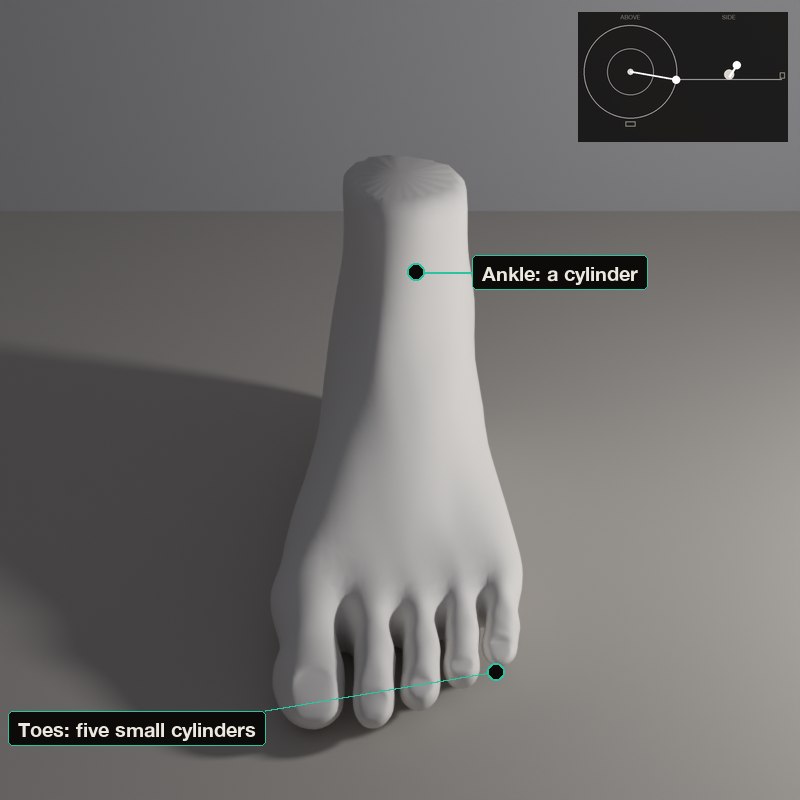
The arch of the foot makes a cast shadow under itself when the lamp is low.
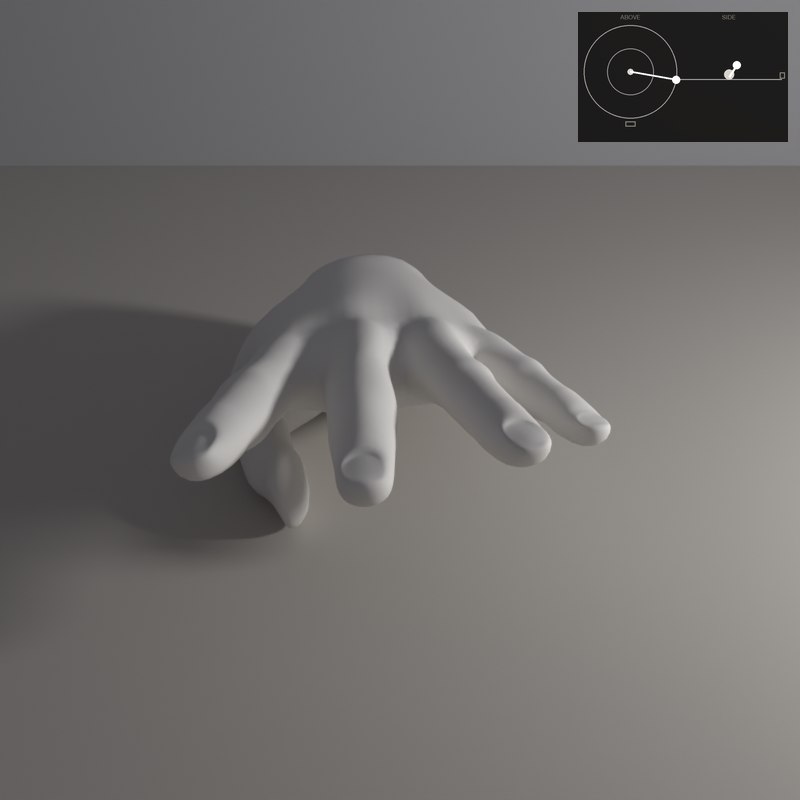
Light from the side makes the long tendons and the creases of the hand read.
Side light shows the structure of the hand: the back is a flat plane, the fingers are cylinders and the knuckles turn quickly.
The set-ups, with numbers
Each card is one lamp position: the picture it makes, a diagram of where the lamp stands (azimuth is measured from the camera: 0° is a lamp at the camera, positive turns it toward the picture’s left, 180° is straight behind; elevation is the angle above the table), and the values measured on the form itself.
In painting and in photography
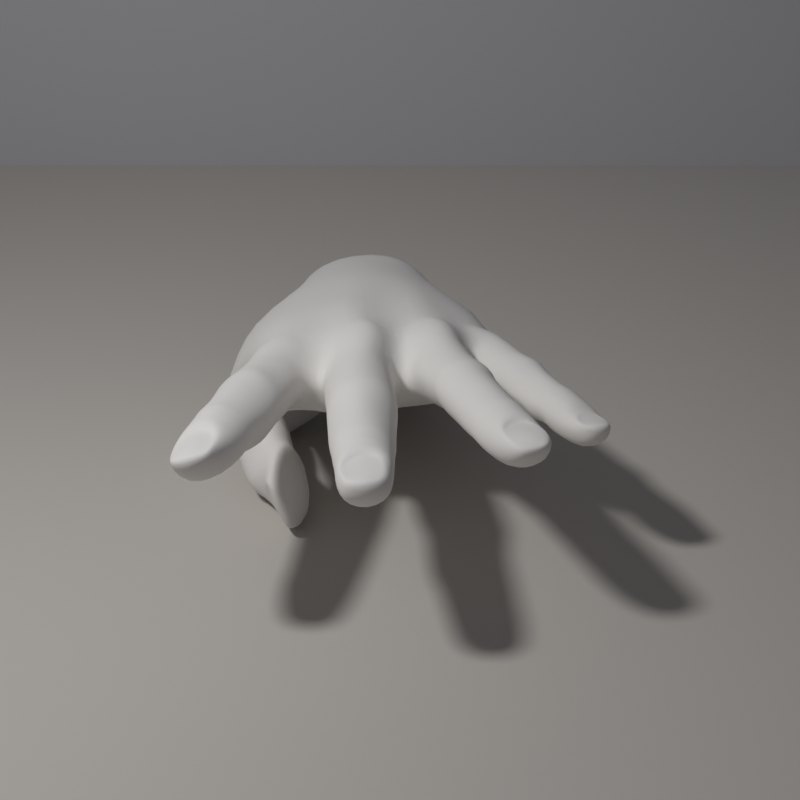
Many academic methods draw a hand as a block with cylinders attached. Light then does the rest: the same values as on the basic forms.
Side light on hands shows age and texture. Photographers and retouchers soften it with a larger source when they want a smoother look.
Now youAcademy & Pro
Load the hand open, relaxed and fist in turn with the lamp at the side. In the Surface view you see the form with no light at all: compare it with the lit picture.
Open this lesson in the Light Study Room
The room opens with the shape and the first set-up already loaded, and the same diagram you see here follows your lamp as you move it. Drag the lamp’s marker on the picture, or move it on the pad, and switch between Picture, Light only, Surface and Shadow. Or open it from inside the studio: the Study button in the bottom bar, then Academy lessons. The Light Study Room is a separate classroom for learning light on 3D shapes; when you are ready, “Send to studio” takes the shape into the main editor.
Exercises
- Light the open hand from the side and find the long cylinders of the fingers.
- Find the position where the four knuckles of the fist throw a row of tiny shadows.
- Light the foot from low and from above. Which one shows the arch?