Reading Theme

Midnight Studio
Warm Sepia
Old Parchment
Clean Paper
17px
Chapters
3D Light Study
1. The four basic forms2. The values of light3. Where the light comes from4. Hard light, soft light and distance5. Cast shadows and lamp height6. Portrait lighting patterns7. The planes of the head8. Hands and feet9. The figure and the mass10. Colour, temperature and the second lamp11. Composing a still life with light
VOLUX Academy — 3D Light Study

Hard light, soft light and distance

Size of the source, and how far it stands
Lesson 4 of 11FoundationsAcademy and Pro
Overview

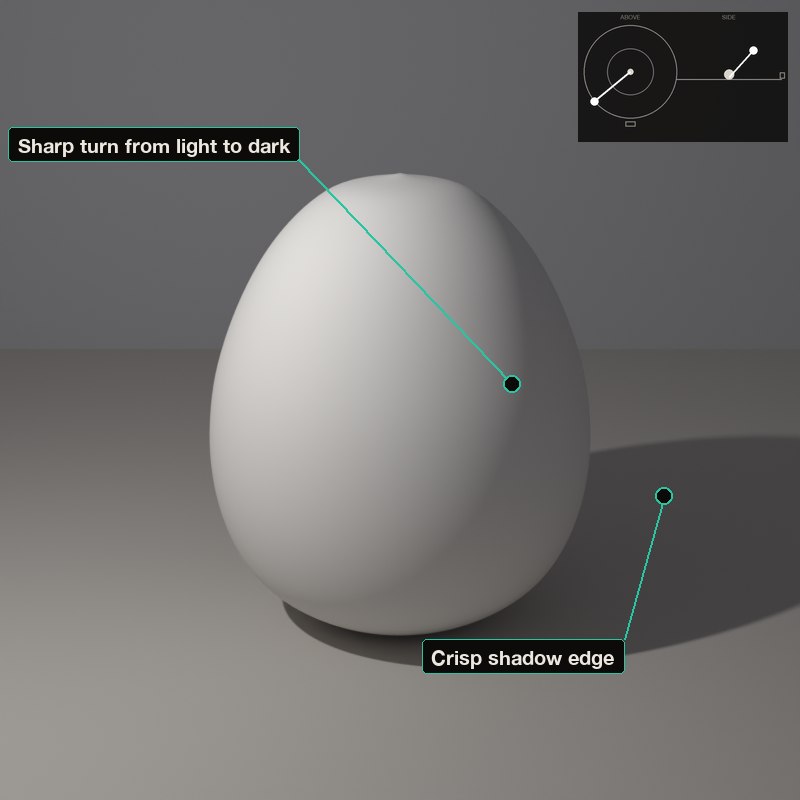
A small source makes hard light: sharp shadow edges and an abrupt turn from light to dark. A large source makes soft light: the shadow edges melt and the turn is gradual.
None
50° toward the picture’s left, 35° above · values on the form 33% to 84%

Vermeer's window and da Vinci's sfumato are soft; a candle or a bare bulb is hard. Distance matters too: a lamp close to the subject lights the near side far brighter than the far side, a distant lamp lights everything almost evenly.

SMALL SOURCE: HARD EDGEedge 8 pxLARGE SOURCE: SOFT EDGEedge 36 px
0°90°180°-90°CAMERATHE SET-UPS FROM ABOVE: + IS TOWARD THE PICTURE'S LEFTHARD, NEAR 50°SOFT, NEAR 50°HARD, FAR 50°SOFT, FAR 50°

A bigger source (or a nearer one) gives a wider soft zone between full light and full shadow.

· · ·
Read the light

What to look for

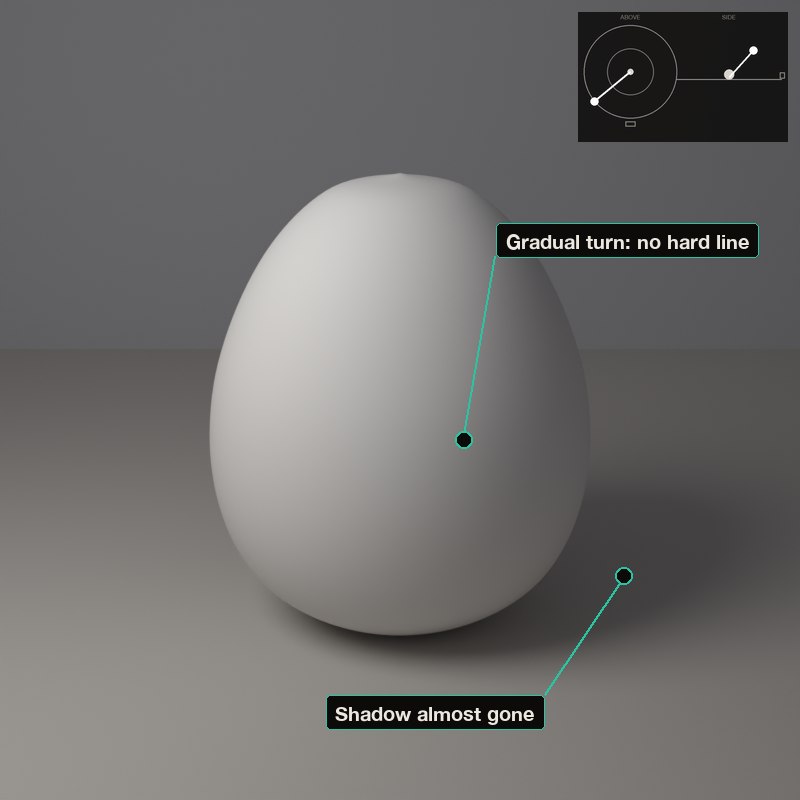
With hard light the cast shadow has a crisp edge and the core shadow is a clear line.
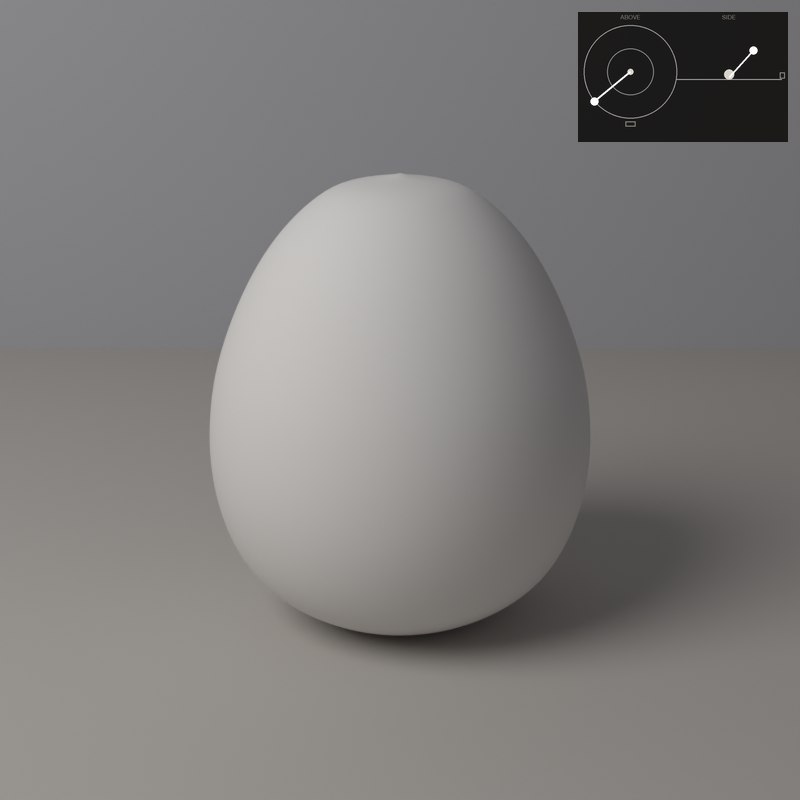
50° toward the picture’s left, 35° above · values on the form 33% to 84%
1

With hard light the cast shadow has a crisp edge and the core shadow is a clear line.

FROM ABOVEFROM THE SIDECAMERACAMERA
AZ 50° EL 35°
darkest 33%average 58%brightest 84%lit 49%
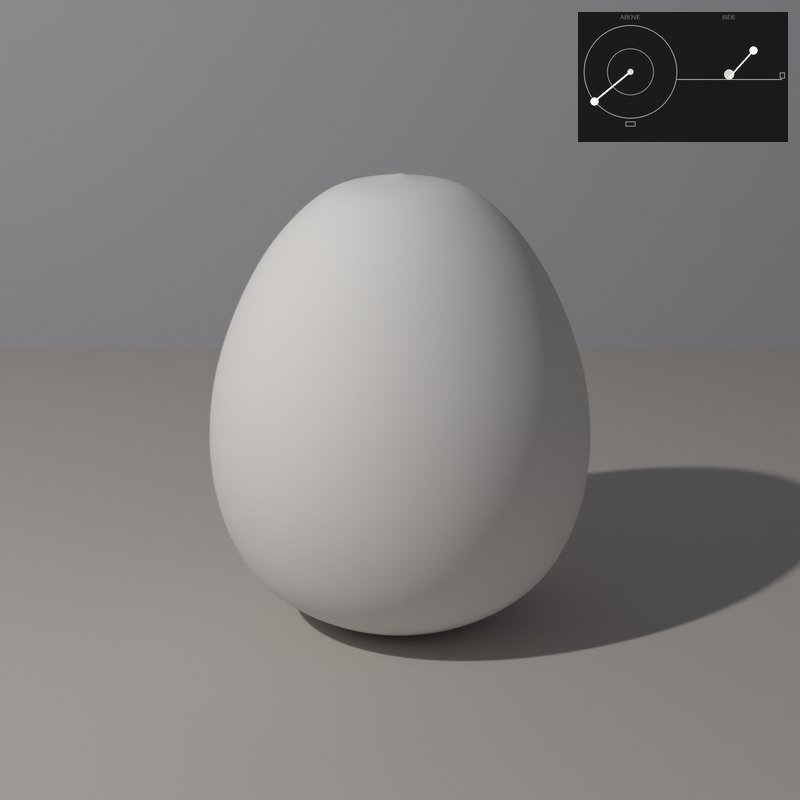
With soft light the shadow edge dissolves, most obviously far from the object.
50° toward the picture’s left, 35° above · values on the form 39% to 76%
2

With soft light the shadow edge dissolves, most obviously far from the object.

FROM ABOVEFROM THE SIDECAMERACAMERA
AZ 50° EL 35°
darkest 39%average 59%brightest 76%lit 59%
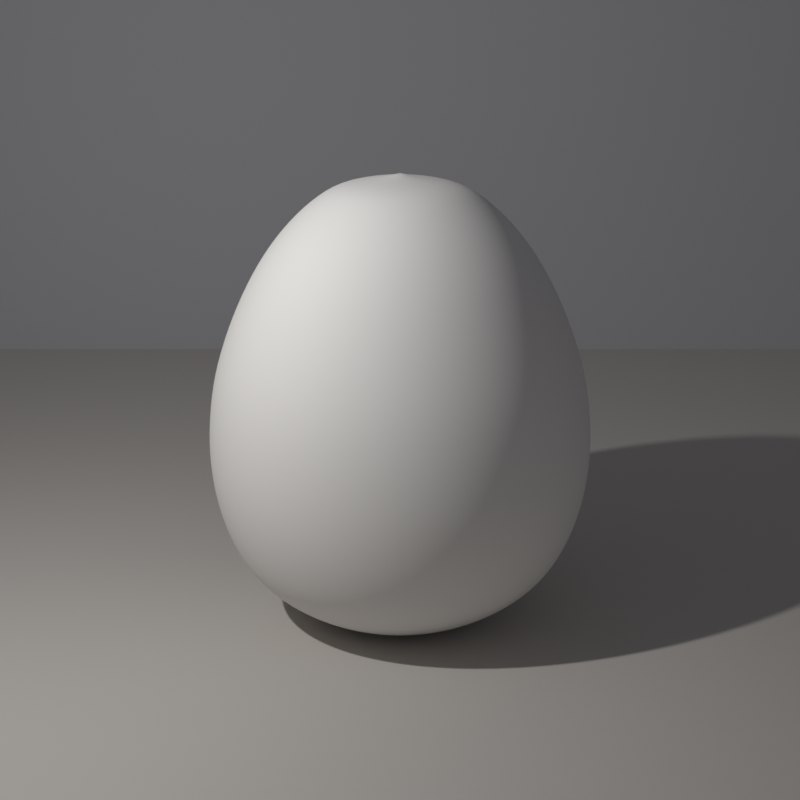
A near lamp makes a steep gradient across the form; a far lamp flattens it.
50° toward the picture’s left, 35° above · values on the form 34% to 80%
3

A near lamp makes a steep gradient across the form; a far lamp flattens it.

FROM ABOVEFROM THE SIDECAMERACAMERA
AZ 50° EL 35°
darkest 34%average 57%brightest 80%lit 50%
Soft light is forgiving on skin; hard light shows every surface detail.
50° toward the picture’s left, 35° above · values on the form 38% to 79%
4

Soft light is forgiving on skin; hard light shows every surface detail.

FROM ABOVEFROM THE SIDECAMERACAMERA
AZ 50° EL 35°
darkest 38%average 61%brightest 79%lit 60%

Raise Softness: the edge of the shadow and the turn of the form both widen. A big source is a soft one.
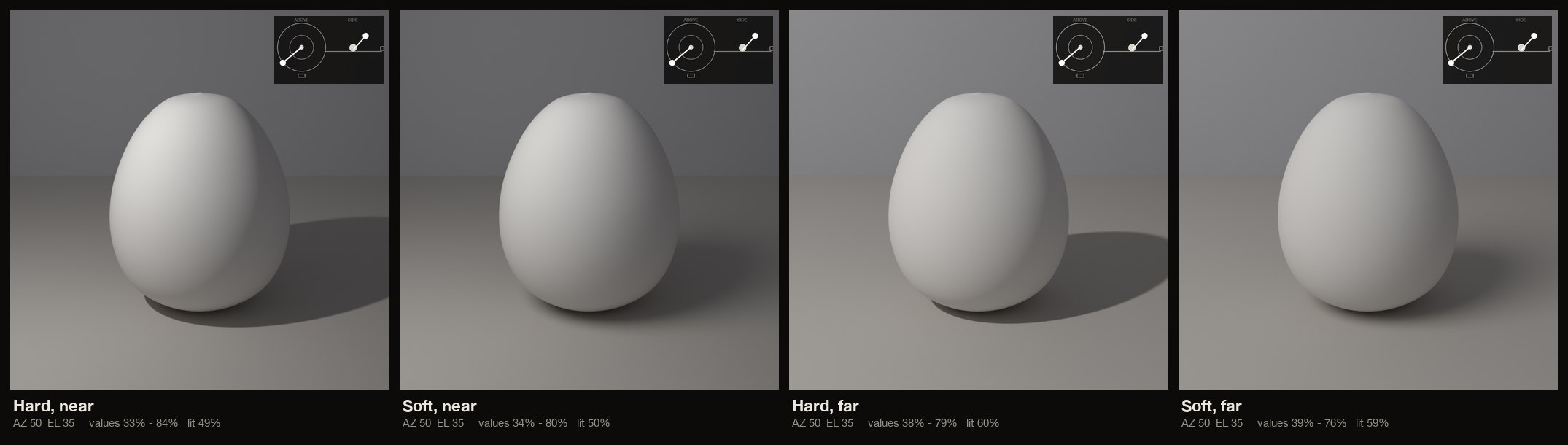
Source size and distance
· · ·
Set-ups

The set-ups, with numbers

Each card is one lamp position: the picture it makes, a diagram of where the lamp stands (azimuth is measured from the camera: 0° is a lamp at the camera, positive turns it toward the picture’s left, 180° is straight behind; elevation is the angle above the table), and the values measured on the form itself.
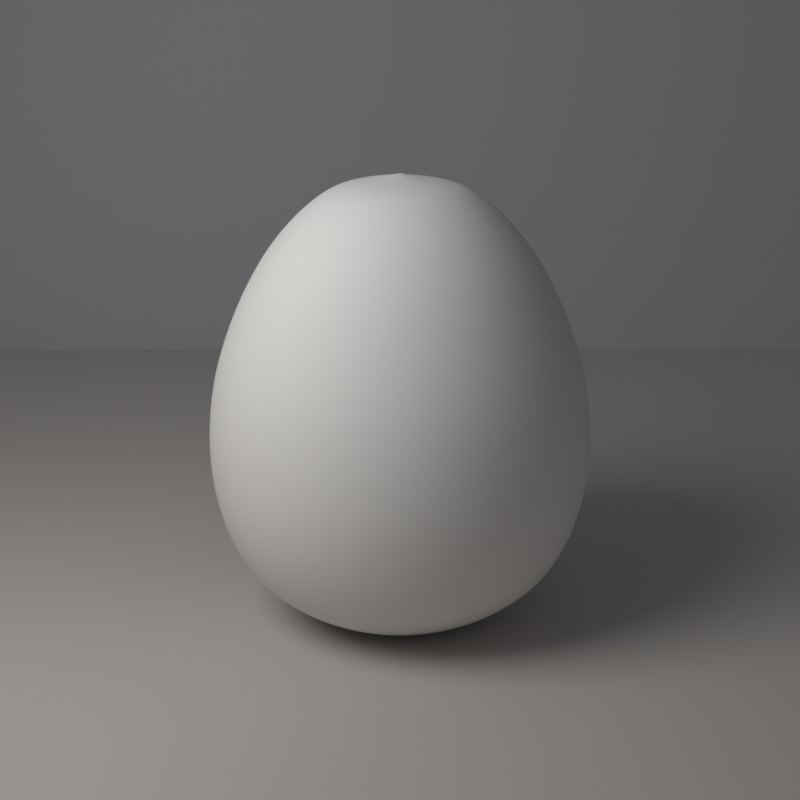
Hard, near
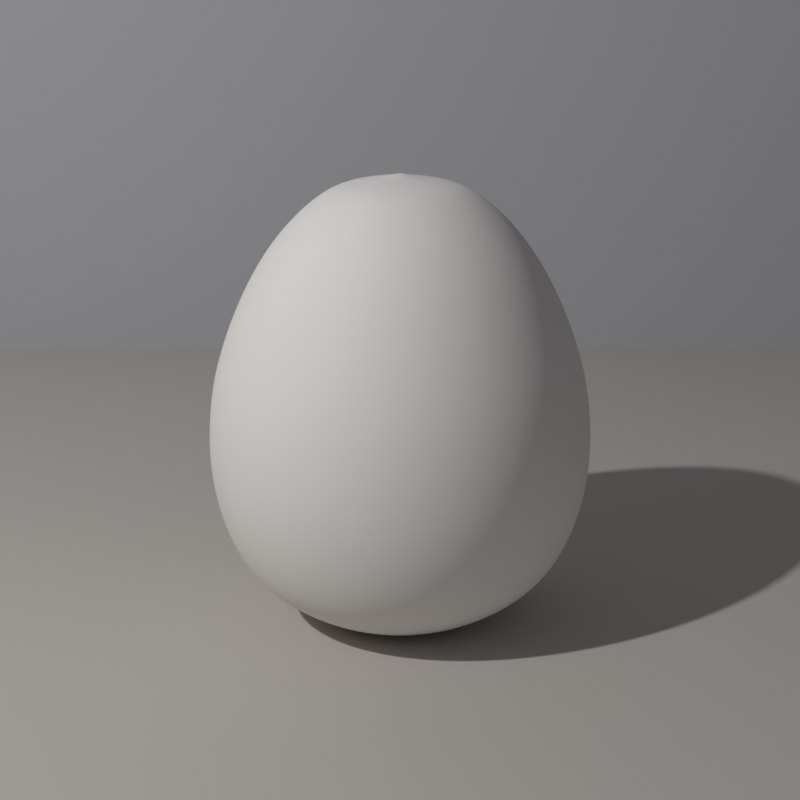
Hard, nearFROM ABOVEFROM THE SIDECAMERACAMERA
AZ 50° EL 35°
darkest 33%average 58%brightest 84%lit 49%
Load in the room →
Soft, near
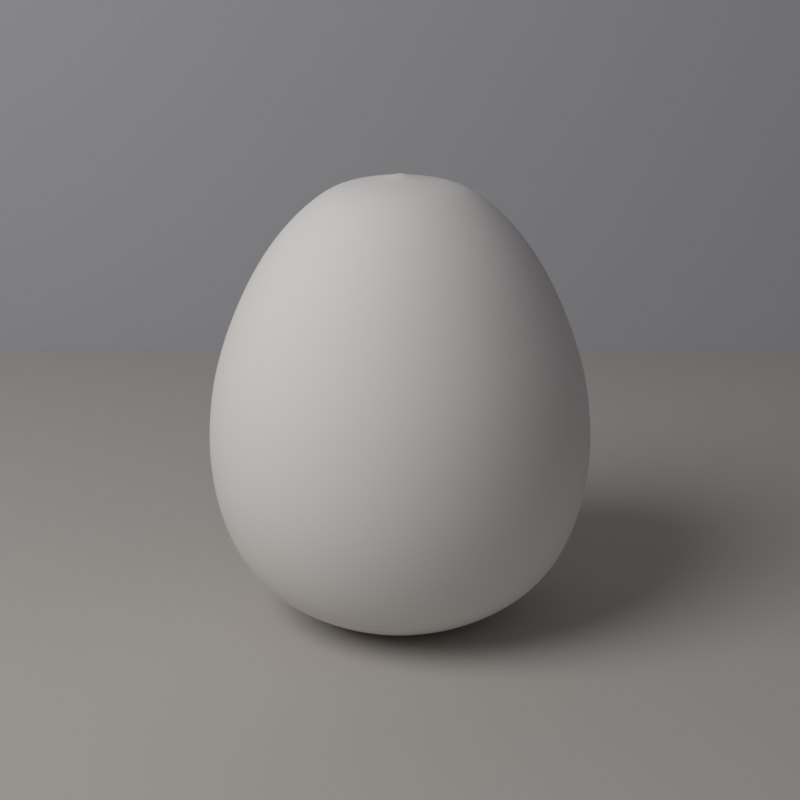
Soft, nearFROM ABOVEFROM THE SIDECAMERACAMERA
AZ 50° EL 35°
darkest 34%average 57%brightest 80%lit 50%
Load in the room →
Hard, far
Hard, farFROM ABOVEFROM THE SIDECAMERACAMERA
AZ 50° EL 35°
darkest 38%average 61%brightest 79%lit 60%
Load in the room →
Soft, far
Soft, farFROM ABOVEFROM THE SIDECAMERACAMERA
AZ 50° EL 35°
darkest 39%average 59%brightest 76%lit 59%
Load in the room →
· · ·
Two traditions

In painting and in photography

In painting

Soft light suits skin and subtle transitions. Hard light suits metal, stone and drama, and it is what makes a form look sculpted.

None
50° toward the picture’s left, 35° above · values on the form 39% to 76%
In photography

A source that is larger relative to the subject is softer. Bringing a lamp closer makes it larger relative to the subject, so the shadows soften and the light falls off faster across the form.

None
50° toward the picture’s left, 35° above · values on the form 34% to 80%
· · ·
In the Light Study Room

Now you

Use the Shadow softness slider in the room from 0 to 100 and watch the cast shadow edge. Then slide Distance from 0.35 to 3 with the lamp in the same direction.

Open this lesson in the Light Study Room

The room opens with the shape and the first set-up already loaded, and the same diagram you see here follows your lamp as you move it. Drag the lamp’s marker on the picture, or move it on the pad, and switch between Picture, Light only, Surface and Shadow. Or open it from inside the studio: the Study button in the bottom bar, then Academy lessons. The Light Study Room is a separate classroom for learning light on 3D shapes; when you are ready, “Send to studio” takes the shape into the main editor.

Exercises

  1. Set Shadow softness to 0, then 100: what happens to the cast shadow edge, and to the core shadow?
  2. Slide Distance from 0.35 to 3: which side of the egg loses its light first?
  3. Which of the four set-ups would you choose for skin? for a metal jug?
· · ·
Keep reading

The masters of this idea

← Where the light comes fromAll lessonsCast shadows and lamp height →